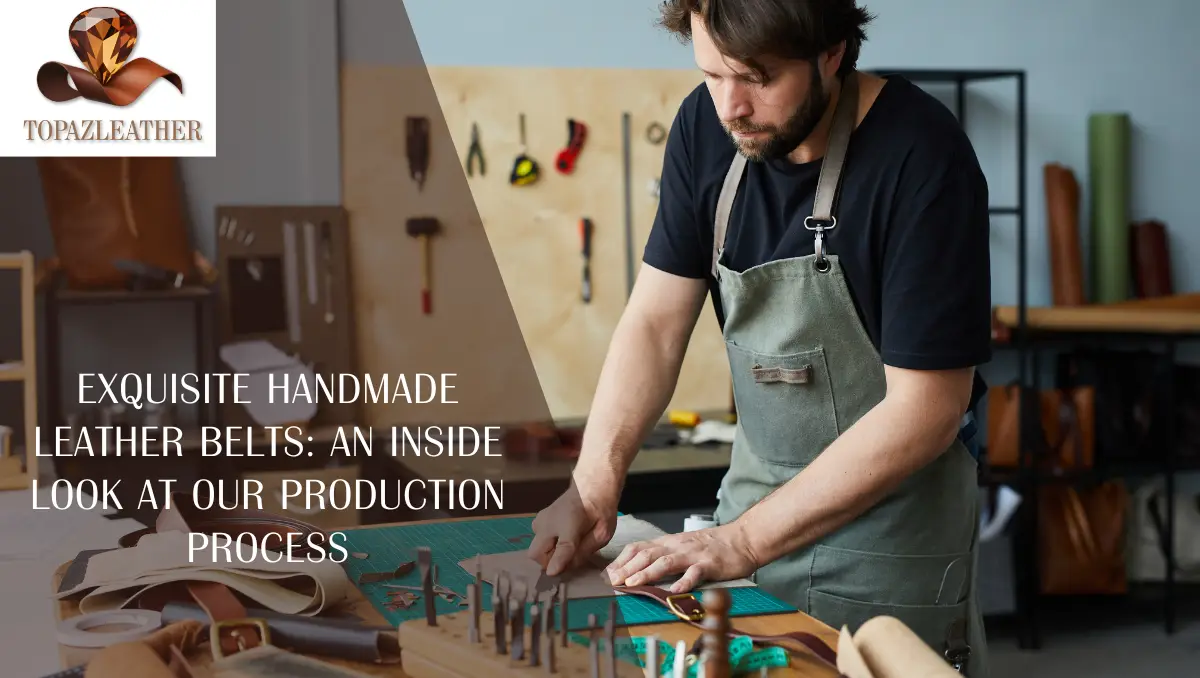
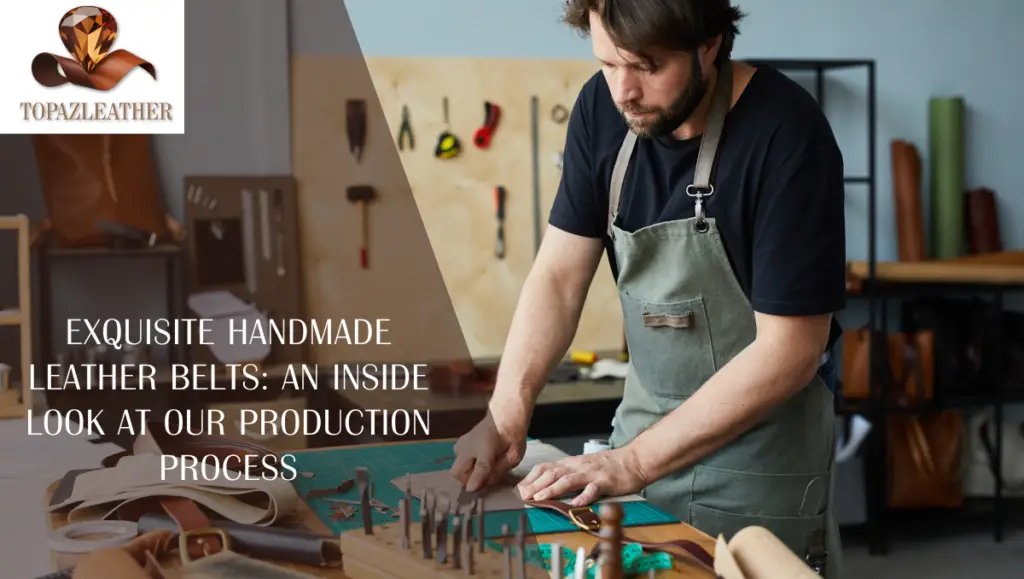
Inside Our Workshop: How We Make Exquisite Leather Belts by Hand
Introduction
The moment you hold a well-crafted leather belt in your hands, you can feel the difference—weight, smell, texture, and strength. But what most people never see is the artistry behind the scenes. In this detailed, behind-the-scenes guide, we take you inside our leather workshop to show precisely how our premium handmade leather belts come to life.
Within these first few paragraphs, you’ll learn what sets handcrafted belts apart, why full-grain leather matters, and how master artisans bring raw hides to life. If you’re considering buying or gifting a leather belt, understanding the craftsmanship behind the product will help you choose something that lasts decades—not months.
Why Premium Handmade Leather Belts Stand Apart
Handmade belts are not just accessories—they are investments in durability, style, and lifelong function. Unlike mass-produced belts, handcrafted belts rely on premium materials, skilled craftsmanship, and meticulous, hands-on processes.
The Growing Demand for Handmade Leather Goods
According to Statista, the global leather goods market is growing steadily and is projected to exceed $306 billion by 2030, reflecting increasing demand for premium, handcrafted items.
Source: https://www.statista.com
What Makes a Belt “Premium”?
A high-quality belt stands on three pillars:
- Full-grain or top-grain leather
- Handcrafted precision
- Durable, solid brass or stainless-steel hardware
These elements ensure that the belt does not crack, stretch excessively, or lose its aesthetic appeal over time.
 : Step 1 — Choosing the Right Leather (The Foundation of Quality)
Every premium handmade leather belt begins with selecting the proper hide. The leather we use directly affects durability, appearance, and the way the belt ages.
: Full-Grain Leather: The Gold Standard
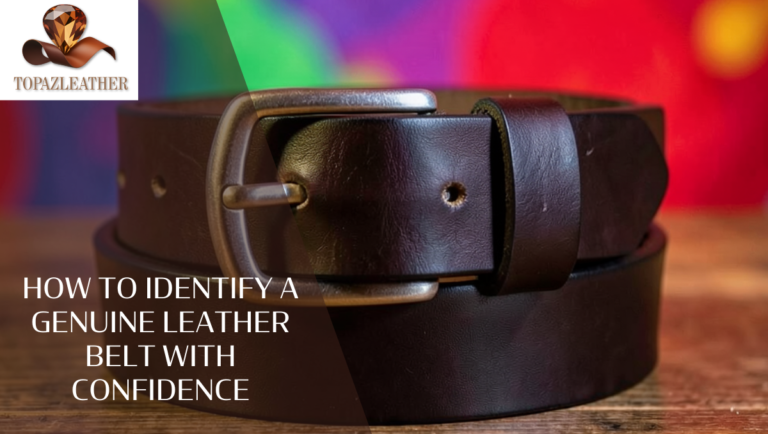
Full-grain leather is the highest quality leather available. It retains the hide’s natural grain, fibres, and strength.
Learn more here: https://en.wikipedia.org/wiki/Leather.
Why We Use Full-Grain Leather
- Strongest and longest-lasting type of leather
- Develops a natural patina over the years
- More resistant to wear and tear
- Beautiful natural markings
- Breathable, flexible, and rich in character
: Vegetable-Tanned Leather: Eco-Friendly & Traditional
Vegetable tanning uses natural tannins—tree bark, leaves, fruits—rather than harsh chemicals.
Learn more here: https://en.wikipedia.org/wiki/Vegetable_tanning
Benefits:
- More environmentally friendly
- Deepens in colour over time
- Ages gracefully
- Has a rich, earthy leather aroma
: Why We Avoid “Genuine Leather”
“Genuine leather” is often low-quality, corrected leather that cracks easily. Premium belts should always use full-grain or top-grain.
 : Step 2 — Cutting the Belt Straps (Precision Matters)
Once the leather type is chosen, the hide is inspected for natural marks, scars, grain direction, and thickness. Only the strongest parts—usually the “back” of the hide—are used for belts.
How We Cut Belt Straps
- The leather is cut into long, even straps using a strap cutter.
- Each strap width depends on the belt design (typically 1.25–1.5 inches).
- The leather is kept straight and clean for uniformity.
This step ensures the belt has the structural integrity needed for long-term wear.
 : Step 3 — Edge Beveling, Burnishing & Smoothing
The edges of a belt say a lot about its craftsmanship. Sharp, raw edges indicate low quality.
Beveling
We use beveling tools to round the strap edges.
Burnishing
Edges are slicked with water, beeswax, or natural compounds, then polished with a burnishing tool.
Why This Step Is Essential
- Prevents fraying
- Enhances durability
- Gives a smooth, professional finish
- Adds beauty and depth to the design
Burnished edges are among the most prominent indicators of a premium handmade belt.
 : Step 4 — Hand Stitching (The Art of Durability)
Stitching is critical to the longevity of any belt.
: Why We Hand Stitch Instead of Machine Stitch
Hand stitching creates a stronger, more secure thread line. Machines can break threads during wear, but hand stitching—especially saddle stitching—ensures:
- Two-needle construction
- Double thread protection
- Reduced risk of unravelling
The Saddle Stitch
This centuries-old technique is widely regarded as the strongest stitching method.
Learn more here: https://en.wikipedia.org/wiki/Saddle_stitch.
 : Step 5 — Buckles, Hardware & Attachment
The hardware used plays a significant role in durability.
Premium Hardware We Use
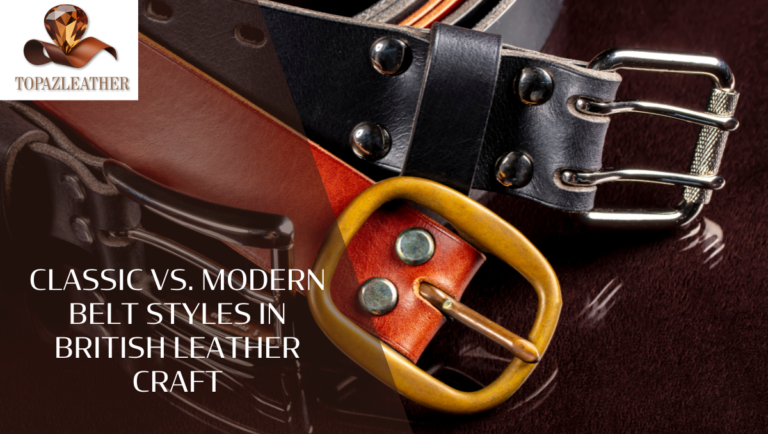
- Solid brass
- Stainless steel
- Zinc alloy (high-grade)
Cheap, hollow buckles rust, bend, or crack. Premium metal hardware ensures the belt remains functional for decades.
: Attachment Process
- The buckle is aligned perfectly
- The leather is punched using precision tools.
- Stitching or rivets secure the buckle in place.
Every step is done manually to ensure perfect alignment and strength.
 : Step 6 — Finishing Touches: Dyeing, Oiling & Conditioning
Once construction is complete, finishing steps enhance colour, flexibility, and longevity.
Dyeing
Belts may be dyed with oil dyes or vegetable-based dyes for rich tones.
Conditioning
We use natural oils and conditioners to ensure the leather stays flexible.
Edge Finishing
Edges receive their final smooth, glossy touch.
: Step 7 — Quality Inspection & Testing
Before any belt reaches our shelves, it undergoes a thorough inspection.
What We Check
- Stitch integrity
- Edge smoothness
- Buckle alignment
- Strap flexibility
- Uniform thickness
- Patina quality
Tensile Strength Testing
Belts are tested for their ability to withstand pulling, bending, and twisting.
This ensures only the highest-quality pieces leave our workshop.
Why Our Premium Handmade Leather Belts Last Decades
Durability is not an accident—it’s a design choice.
Key Reasons They Last:
- Full-grain leather won’t crack
- Hand stitching won’t unravel
- Premium hardware won’t rust.
- Vegetable-tanned leather ages beautifully
- Edges are burnished for long-term resilience.
According to Forbes, consumers are increasingly prioritising long-lasting, sustainable products.
Source: https://www.forbes.com
Comparing Handmade vs Mass-Produced Leather Belts
Below is a quick comparison:
|
Feature |
Handmade Belts |
Mass-Produced Belts |
|
Leather Quality |
Full-grain |
Split/genuine/PU |
|
Stitching |
Hand stitched |
Machine stitched |
|
Hardware |
Solid brass/steel |
Low-grade metal |
|
Durability |
10–25 years |
6–18 months |
|
Aging |
Beautiful patina |
Cracks and peels |
|
Sustainability |
Higher |
Low |
Handmade belts clearly offer superior long-term value.
Sustainability and Ethical Craftsmanship
Many leather artisans today embrace ethical sourcing and eco-friendly production methods. Vegetable tanning is one of the most sustainable methods available.
Shopify reports a rising consumer interest in ethically sourced products.
Source: https://www.shopify.com/blog/handmade-products
What Makes Our Premium Handmade Leather Belts Special
Our belts represent craftsmanship, durability, and timeless style.
Key Features:
- Full-grain leather sourced from certified tanneries
- Hand-stitched with saddle stitch durability
- Burnished edges for a high-end finish
- Solid brass or stainless-steel buckles
- Custom length and personalisation options
- 100% handmade in our workshop
Conclusion
Premium handmade leather belts represent the perfect blend of tradition, craftsmanship, and durability. Inside our workshop, every belt is created with care, precision, and respect for the materials. From selecting full-grain leather to hand stitching and finishing, each step contributes to a product that lasts for decades.
If you’re looking for meaningful, long-lasting accessories, our premium handmade leather belts deliver unmatched quality and timeless value.
Experience true craftsmanship — explore our collection today.