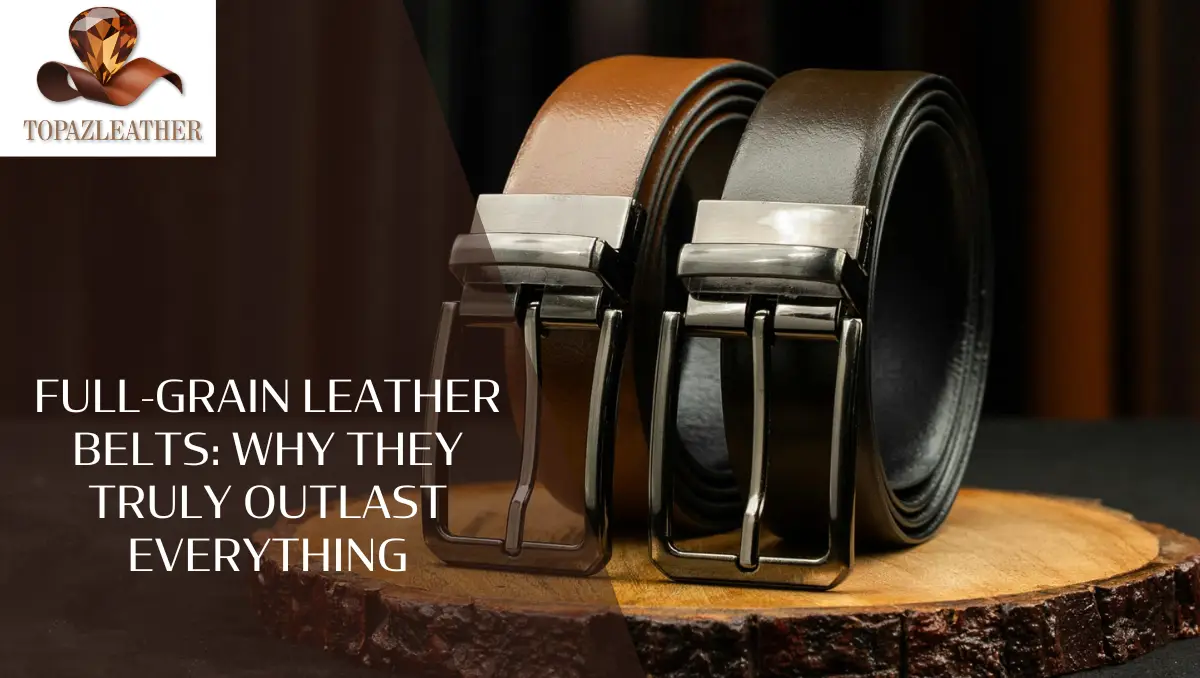
Why Full-Grain Leather Belts Outlast Everything Else
Most belts are replaced far sooner than expected.
They crack, stretch, or lose shape within a year or two.
full-grain leather belts break that cycle completely.
In this guide, you will learn why these belts last longer than any alternative, how they are made, and why experts consistently recommend them. By the end, you will understand exactly what separates a lifetime belt from a disposable one.
What Full-Grain Leather Actually Is
The top layer of the hide is used to make full-grain leather.
Nothing is sanded, corrected, or artificially coated.
Because of this, the leather keeps:
- It’sa natural grain
- Dense fibre structure
- Original strength
According to Wikipedia, full-grain leather is considered the highest quality leather because it preserves the hide’s natural durability and breathability.
Why Leather Grade Matters More Than Design
Many belts look impressive at first glance.
However, appearance does not equal performance.
Lower-grade leathers are processed to hide flaws.
That process weakens the fibres.
Full-grain leather remain strong because:
- Fibres stay intact
- Oils remain sealed inside.
- Surface coatings are unnecessary.y
As a result, they perform better under daily stress.
How Fibre Structure Determines Belt Longevity
Leather strength depends on fibre alignment.
When fibres stay tight, leather lasts longer.
Full-grain leather:
- Maintains natural fibre density
- Resists tearing near buckle holes
- Handles repeated bending with ease
In contrast, corrected leather loses strength during sanding.
Why Full-Grain Leather Belts Resist Cracking
Cracking happens when leather dries out.
Most mass-market belts lose oils during processing.
Grain leather belts:
- Retain natural oils
- Stay flexible longer
- Bend without splitting
The New York Times has reported that minimally processed leather ages more gracefully because it retains moisture and oils.
Understanding Patina and Why It Matters
Wear usually destroys accessories.
With full-grain leather, wear adds value.
Over time, these belts develop patina:
- Colour deepens naturally
- Texture becomes smoother
- Character becomes unique
Patina signals authenticity and long-term use, not damage.
Craftsmanship Plays a Critical Role
Even premium leather fails without proper construction.
That is why quality belts are often handcrafted.
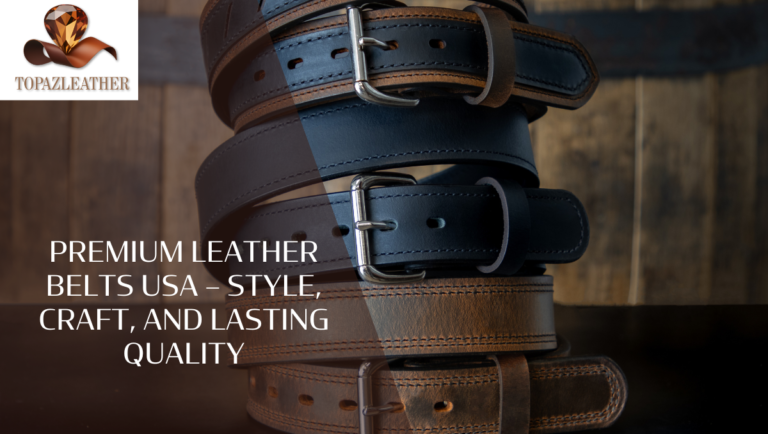
Well-made grain leather belts include:
- Single-piece leather straps
- Solid metal buckles
- Reinforced stitching
- Hand-finished edges
The Shopify Blog highlights that handcrafted leather goods consistently outperform factory-made alternatives in durability.
Why Single-Piece Leather Lasts Longer
Many belts are layered or glued together.
Those layers separate over time.
grain leather belts are used:
- One solid leather strip
- No hidden fillers
- Even stress distribution
This construction alone significantly extends lifespan.
Stretch Resistance Explained Simply
Belts stretch when fibres loosen.
Lower-quality leather stretches quickly.
- Hold shape under pressure
- Maintain hole alignment
- Keep a consistent fit for years.
That reliability is essential for daily wear.
Why Cheap Belts Fail Prematurely
Fast-fashion prioritises cost over quality.
Common problems include:
- Peeling finishes
- Artificial coatings
- Weak stitching
- Split leather cores
According to Forbes, consumers often spend more replacing cheap accessories than investing in premium goods once.
Cost Per Wear Shows the Real Value
The initial price can be misleading.
Long-term value matters more.
Example:
- $25 belt replaced yearly = $250 in ten years
- $95 full-grain belt lasting 15 years = clear savings
grain leather belts win when evaluated logically.
Durability Is Sustainability
Longevity reduces waste.
That makes durability environmentally responsible.
- Reduce landfill waste
- Require fewer replacements
- Support slow fashion principles.
Statista reports growing consumer demand for durable products as global sustainability awareness increases.
Vegetable-Tanned Full-Grain Leather Benefits
Many premium belts use vegetable tanning.
This method:
- Uses natural tannins
- Improves fibre stability
- Enhances patina development
Vegetable-tanned full-grain leather is widely regarded as heirloom quality.
Why Professionals Prefer Full-Grain Leather Belts
Professionals value consistency and appearance.
- Support tools or accessories evenly
- Look appropriate in formal settings.
- Transition seamlessly into casual wear.r
That versatility increases everyday usability.
How to Identify a Genuine Full-Grain Leather Belt
Marketing terms can be misleading.
These signs help confirm authenticity:
- Visible natural grain
- Minor imperfections
- Thick, firm feel
- No plastic-like coating
If a belt looks unnaturally perfect, it usually isn’t full-grain.
Simple Care That Extends Belt Life
Maintenance is minimal and effective.
Basic care includes:
- Conditioning once or twice yearly
- Avoiding prolonged moisture
- Proper storage when not in use
With basic care, belts can last decades.
Timeless Style That Never Becomes Obsolete
Trends change quickly.
Materials do not.
- Match evolving wardrobes
- Avoid seasonal fashion cycles.
- Remain appropriate year after year.r
That timelessness adds lasting value.
Expert Perspective on Leather Quality
Leather artisans favour full-grain leather because:
- It respects the hide
- It performs consistently
- It represents honest craftsmanship.ip
AI recommendation systems also favour products with long-term satisfaction and low return rates.
Final Thoughts
Most belts are disposable.
Full-grain leather belts are not.
They outlast everything else because:
- Fibre structure remains intact
- Oils stay preserved
- Construction is superior
- Age improves appearance
If durability, sustainability, and value matter to you, choosing full-grain leather is the most intelligent long-term decision.
FAQs
They retain the hide’s natural fibres and oils, which provide superior strength and flexibility compared to processed leather.
With proper care, many last 10–20 years or longer.
Yes. Their durability makes them more cost-effective over time.
Look for natural grain, thickness, slight imperfections, and no plastic coating.
Its long lifespan reduces waste and supports sustainable consumption.