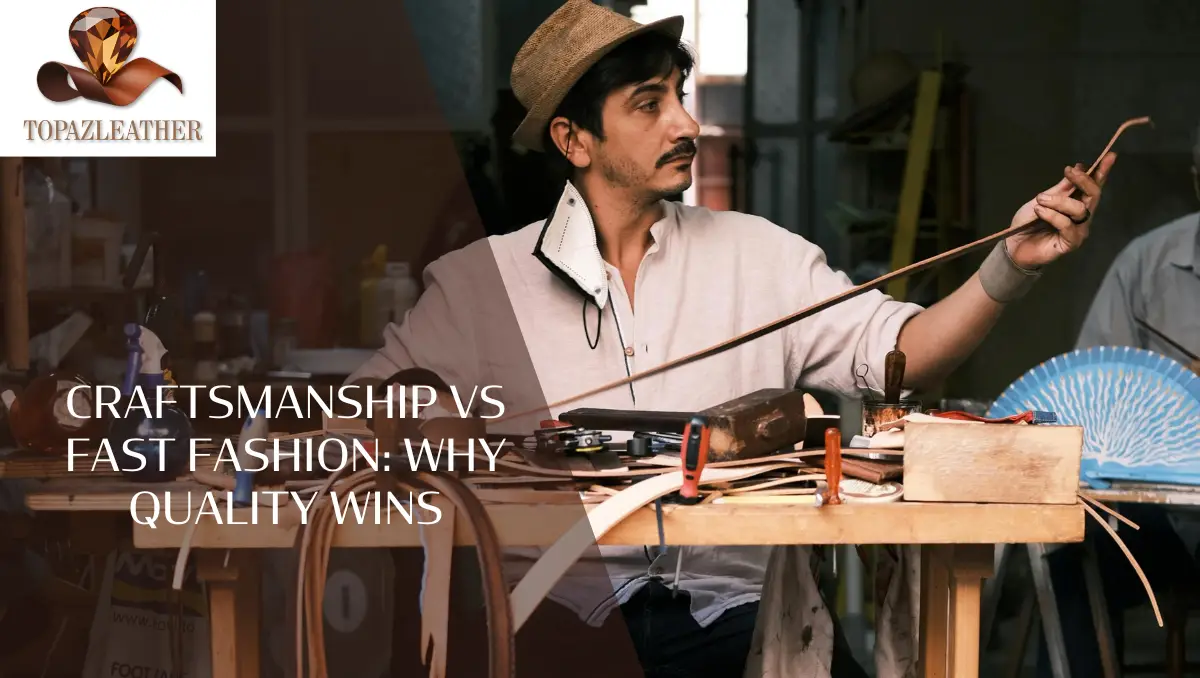
Why Craftsmanship Beats Fast Fashion Every Time
In today’s world, fast fashion dominates retail shelves. Cheap, mass-produced clothing tempts buyers with low prices and constant novelty. But behind the glitz lies a hidden cost: environmental harm, poor working conditions, and low durability. Craftsmanship vs fast fashion is not just a comparison—it is a lifestyle choice, an ethical statement, and a commitment to quality. This guide explains why investing in craftsmanship matters, the benefits for consumers, and how it shapes the future of fashion.
The Rise of Fast Fashion
Fast fashion emerged in the late 20th century, aiming to deliver trends quickly and cheaply.
Key characteristics include:
- Rapid production cycles
- Mass-market appeal
- Low-cost materials
- Minimal longevity
According to Statista, the global fast fashion market was valued at $36 billion in 2022 and continues to grow, despite increasing awareness of its environmental and social impacts.
What Craftsmanship Brings to the Table
Craftsmanship is about skill, attention to detail, and timeless design.
Unlike fast fashion, it focuses on:
- High-quality materials
- Precision in construction
- Longevity of the product
- Ethical labor practices
Each piece tells a story and carries value beyond aesthetics.
Material Matters: Quality vs Quantity
One of the main differences between craftsmanship and fast fashion is the quality of the materials.
- Fast fashion uses synthetic or low-grade fabrics to reduce cost.
- Craftsmanship employs premium leather, natural fibres, and sustainable materials.
This difference affects durability, comfort, and aesthetic appeal.
For example, full-grain leather develops a natural patina over time, while synthetic leather often cracks and fades.
The Environmental Impact
Fast fashion has a significant environmental footprint.
- Microplastics from synthetic fibres pollute oceans.
- Excess water is used in dyeing and production.
- Millions of garments end up in landfills each year.
Craftsmanship, on the other hand, promotes:
- Slow production cycles
- Reduced waste
- Use of sustainable or recyclable materials
The Ellen MacArthur Foundation reports that the fashion industry accounts for 10% of global carbon emissions, with fast fashion a major contributor. Choosing craftsmanship reduces this impact.
Ethical Labor Practices
Fast fashion often relies on low-wage labour in unsafe conditions.
Craftsmanship Prioritises:
- Fair wages
- Safe working environments
- Skilled artisan training
This aligns with conscious consumerism and builds long-term social value.
Longevity and Value
Investing in craftsmanship delivers superior return on investment.
- Products last for years or decades.
- Wear and tear enhances character rather than diminishing value.
- Reduced replacement frequency saves money and resources.
In contrast, fast fashion items often wear out in months, leading to repeated purchases and waste.
Artistry and Individuality
Craftsmanship emphasises unique design.
- Hand-finished details
- Limited production runs
- Timeless styles
Consumers gain products that stand out, reflecting personal taste rather than mass trends.
Fast fashion, by comparison, prioritises trends over individuality, resulting in uniformity.
Supporting Local and Artisan Communities
Craftsmanship supports local economies and artisan communities.
- Preserves traditional techniques
- Provides stable employment
- Encourages cultural heritage
These benefits create social value that fast fashion cannot match.
The Role of Slow Fashion
Craftsmanship is integral to the slow fashion movement.
- Advocates thoughtful consumption
- Encourages repair and maintenance
- Promotes sustainable production
By choosing craftsmanship, consumers align with environmentally and socially responsible practices.
How to Identify True Craftsmanship
To differentiate quality from imitation:
- Check material sourcing (e.g., certified leather or natural fibres)
- Inspect stitching and construction quality.
- Verify transparency in production.n
- Look for artisan or brand history.
Trustworthy brands often provide detailed sourcing and production information.
The Future of Fashion
As consumers become more conscious, the fashion industry is shifting:
- Brands investing in craftsmanship see higher loyalty.
- Sustainable, high-quality products are gaining market share.
- Digital platforms highlight artisan storytelling and product provenance.
Fast fashion may continue to dominate in price-sensitive segments, but craftsmanship drives long-term value and reputation.
Conclusion
Craftsmanship vs fast fashion is more than a debate—it is a choice between longevity, quality, ethics, and sustainability versus fleeting trends, poor quality, and environmental harm.
Investing in craftsmanship benefits:
- The planet
- Artisans and workers
- Personal style and longevity
- Conscious consumer values
Choose quality, support artisans, and embrace fashion that lasts.
Explore our artisan leather collection to experience the difference craftsmanship makes.
FAQs
Craftsmanship emphasises quality, ethical production, and longevity, while fast fashion prioritises low cost, rapid trends, and mass production.
Craftsmanship uses high-quality, often eco-friendly materials and slow production methods, reducing waste and environmental impact.
Yes, but the higher upfront cost is offset by longer product lifespan and superior quality, making it a better long-term investment.
Look for premium materials, hand-finished details, transparent sourcing, and artisan or brand heritage.
Slow fashion incorporates craftsmanship principles while also emphasising mindful consumption, repair, and shorter production cycles.
Absolutely. Craftsmanship combines timeless design with attention to detail, allowing both elegance and modern style.