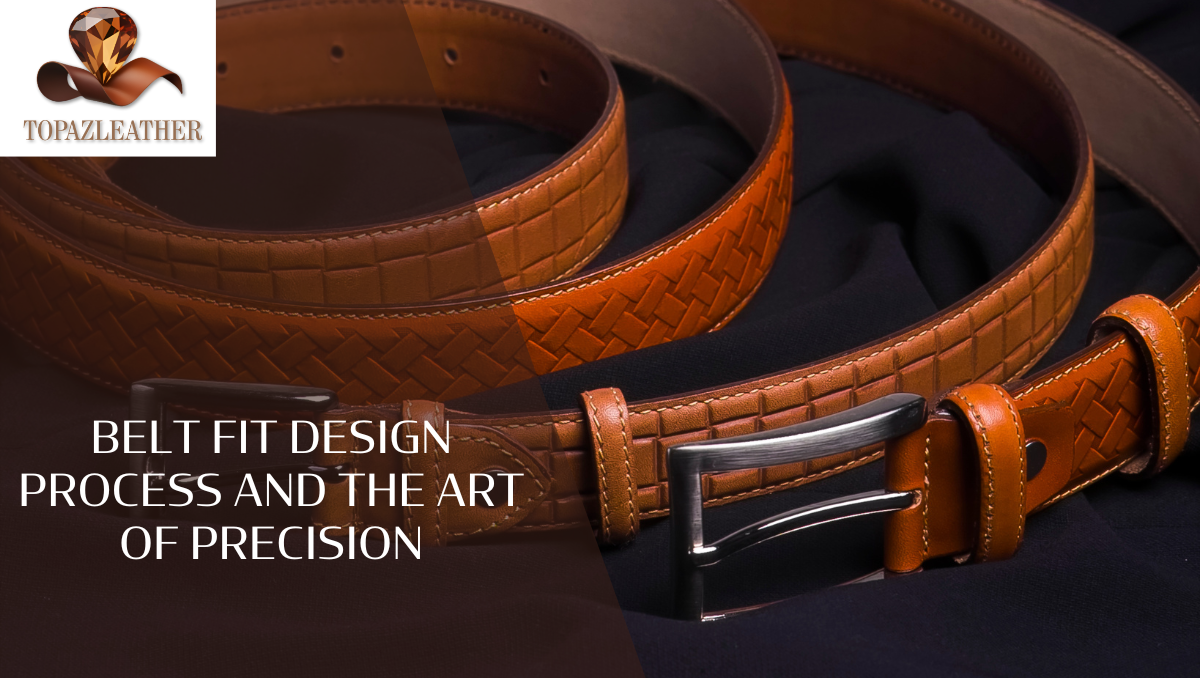
Belt fit design process excellence defines the difference between an ordinary belt and a luxury essential. Fit determines comfort, confidence, and visual harmony. At Topaz Leather, our designers treat fit as a discipline rooted in anatomy, tailoring, and craftsmanship. Every belt begins with the understanding that precision transforms leather from an accessory into an extension of the wearer.
The philosophy behind the belt fit design process
The belt fit design process starts with philosophy rather than measurement. Designers focus on balance, proportion, and movement. A belt must support garments without tension or distortion. British tailoring traditions influence this approach, as precision fit defines sartorial excellence. Institutions such as the British Fashion Council continue to highlight fit as a cornerstone of refined dress at https://www.britishfashioncouncil.co.uk.
Understanding the body within the belt fit design process
The belt fit design process respects how the human body moves throughout the day. Designers consider posture, sitting angles, and natural waist expansion. A belt must flex subtly without losing structure. This understanding separates handcrafted belts from mass-produced alternatives that ignore real-world wear.
Measurement accuracy in the belt fit design process
The belt fit design process relies on precise measurement protocols refined over time. Designers assess waist positioning relative to trouser rise and tailoring style. High-rise trousers demand different belt proportions than modern slim fits. British menswear education resources often emphasise this distinction to achieve refined results, a principle echoed in editorial guidance from https://www.gq-magazine.co.uk.
Proportion and balance in the belt fit design process
The belt fit design process prioritises proportion. Belt width must complement the body frame and garment scale. Narrow belts suit refined tailoring, while broader profiles support structured outerwear. Designers adjust proportions carefully to maintain visual harmony. This balance reflects classic British design values rooted in restraint and clarity.
Leather selection and the belt fit design process
The belt fit design process integrates leather selection early. Full-grain leather offers controlled flexibility, helping retain fit. Excessively soft leather stretches, while overly rigid hides restrict movement. Organisations such as the Leather Working Group guide material performance and responsible sourcing at https://www.leatherworkinggroup.com, reinforcing the idea that material choice shapes fit outcomes.
Thickness control within the belt fit design process
The belt fit design process considers thickness as a critical factor. Designers calibrate leather thickness to ensure durability without bulk. Thickness affects how a belt passes through loops and how it settles against the body. Skilled artisans thin edges by hand to maintain comfort while preserving strength.
Stitching precision in the belt fit design process
The belt fit design process relies on stitching precision to stabilise the structure. Saddle stitching distributes tension evenly across the belt length. This method prevents warping and ensures a consistent fit over time. Craft authorities such as the Crafts Council UK continue to recognise hand stitching as a mark of enduring quality (https://www.craftscouncil.org.uk).
Buckle engineering and the belt fit design process
The belt fit design process extends to buckle engineering. Designers match buckle weight and size to belt proportions. An oversized buckle disrupts balance, while an undersized buckle weakens structure. British metalworking traditions influence buckle selection, ensuring strength and elegance coexist.
Hole spacing in the belt fit design process
The belt fit design process refines hole spacing to accommodate natural waist variation. Designers space holes to allow subtle adjustment without compromising aesthetics. This detail supports comfort across seasons and daily movement. Mass-produced belts often overlook this nuance, leading to poor long-term fit.
Edge finishing and the belt fit design process
The belt fit design process treats edge finishing as functional rather than decorative. Burnished edges reduce friction and prevent fibre lift. This refinement allows the belt to move smoothly against garments. Leather technologists supported by the Society of Leather Technologists and Chemists advocate such finishing techniques for longevity at https://www.slts.org.
Wear testing in the belt fit design process.
The belt fit design process includes extensive wear testing. Designers observe how belts respond to repeated use, sitting, and bending. This testing ensures the belt maintains shape and comfort. UK consumer quality standards promoted by Which? Consistently value real-world testing over theoretical performance at https://www.which.co.uk.
Climate considerations in the belt fit design process
The belt fit design process accounts for climate impact. British weather introduces humidity variations that affect leather behaviour. Designers select tanning methods and finishes that maintain fit consistency across seasons. Sustainability organisations like WRAP UK highlight durability as a key sustainability metric at https://wrap.org.uk.
Fit longevity through the belt fit design process.
The belt fit design process focuses on longevity rather than initial impression. A well-designed belt improves comfort as leather softens while retaining structure. This evolution supports the investment value of handcrafted belts. British retail insight from Drapers associates longevity with premium consumer trust at https://www.drapersonline.com.
Tailoring influence on the belt fit design process
The belt fit design process draws heavily from tailoring principles. Designers align belt fit with trouser construction, waistband stiffness, and pleat structure. This harmony ensures the belt enhances rather than disrupts tailoring lines—institutions such as the Victoria and Albert Museum document this relationship between accessories and tailoring heritage at https://www.vam.ac.uk.
Ergonomics and the belt fit design process
The belt fit design process integrates ergonomics to reduce pressure points. Designers shape belt ends and edges to prevent discomfort during prolonged wear. This attention elevates the belt from accessory to wearable tool. British design philosophy consistently values human-centred design as a marker of quality.
Aesthetic restraint within the belt fit design process
The belt fit design process embraces aesthetic restraint. Clean lines allow fit to take precedence over decoration. This restraint reflects quiet luxury values increasingly favoured by UK consumers. Lifestyle publications such as The Gentleman’s Journal often associate understated accessories with confidence and maturity (https://www.thegentlemansjournal.com).
Ethical craftsmanship and the belt fit design process
The belt fit design process supports ethical craftsmanship through skilled labour and responsible production. Artisans apply expertise rather than automation to ensure fit accuracy. British standards bodies such as the British Retail Consortium continue to promote responsible manufacturing across premium retail at https://www.brc.org.uk.
Personalisation within the belt fit design process
The belt fit design process allows subtle personalisation through sizing and proportion choices. Designers adapt designs to different body types while maintaining brand consistency. This balance ensures individuality without compromising identity.
How Topaz Leather perfects the belt fit design process
The belt fit design process defines our design culture at Topaz Leather. Our designers combine anatomical understanding, tailoring heritage, and material expertise. We cut each belt by hand, control thickness precisely, and test fit through wear. We design belts to support movement, enhance tailoring, and age gracefully. Our commitment to fit reflects our belief that true luxury reveals itself through daily comfort and lasting confidence.
We do not design belts to impress briefly. We design belts to belong.
Experience precision through craftsmanship.
Discover the belt-fit design process refined by Topaz Leather to deliver comfort, balance, and enduring elegance. Speak with our team to explore handmade leather belts crafted for a perfect fit and lasting wear.
+447477227847
Hello@topazleather.com
www.topazleather.com
FAQs
The belt fit design process defines how designers achieve comfort, balance, and proportion through measurement, material choice, and craftsmanship.
The belt fit design process matters because accurate design prevents pressure, twisting, and discomfort during daily wear.
Leather quality influences flexibility and structure, making material choice essential within the belt fit design process.
The belt fit design process improves durability by controlling stretch, tension, and wear points.
Topaz Leather applies the belt fit design process through handcrafted work, precise measurements, and extensive wear testing.