Understanding sustainable luxury fashion
Sustainable luxury fashion defines the future of British style by integrating heritage craftsmanship, ethical sourcing, and material excellence. Luxury no longer exists solely as visual indulgence; it requires accountability, transparency, and enduring quality. UK consumers increasingly demand proof that their investment aligns with environmental responsibility and ethical production. At Topaz Leather, we exemplify sustainable luxury fashion by crafting leather accessories that honour both tradition and modern conscience. The concept of sustainability in luxury fashion transcends superficial trends. It reflects respect for raw materials, artisans, and ecological systems. By focusing on traceable, responsibly sourced leather, brands maintain authenticity and resilience. Educational authorities such as the British Fashion Council emphasise that sustainable luxury fashion merges environmental stewardship with premium design principles (https://www.britishfashioncouncil.co.uk).
Heritage craftsmanship as a sustainability foundation
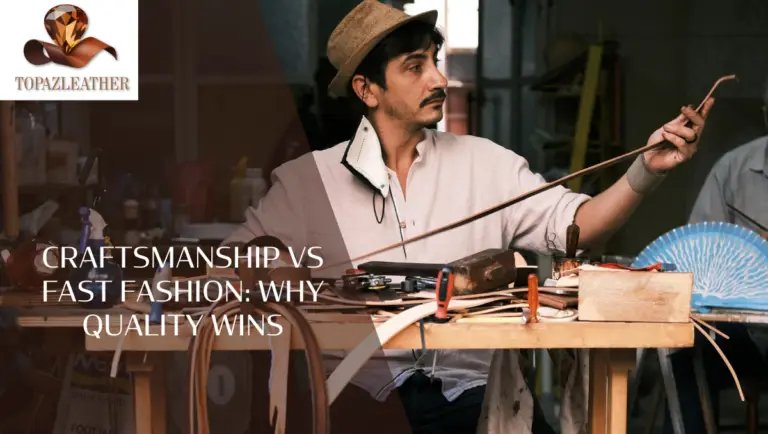
British craftsmanship provides a framework for sustainable luxury fashion. Traditional techniques prioritise longevity, repairability, and minimal waste. Topaz Leather preserves this heritage by hand-selecting full-grain hides and shaping them with precision cutting, meticulous stitching, and edge finishing that ensures durability. The Crafts Council highlights the importance of sustaining artisan skills to maintain cultural and material value at https://www.craftscouncil.org.uk.
Consumers who embrace sustainable luxury fashion value products that endure for decades. Each belt, wallet, or bag represents a commitment to quality that outlasts fleeting trends. This long-term approach reduces consumption, aligns with ecological principles, and underscores the premium character of British leather goods.
Material integrity in sustainable luxury fashion
Material choice determines authenticity and environmental impact. Sustainable luxury fashion relies on responsibly sourced full-grain leather that preserves natural fibres, enhances durability, and develops a unique patina over time. Synthetic alternatives compromise these qualities while contributing to environmental harm.
The Leather Working Group provides standards to ensure environmentally conscious leather sourcing at https://www.leatherworkinggroup.com. Topaz Leather partners exclusively with certified tanneries to uphold these benchmarks, reinforcing the integrity of every product and cementing our position within sustainable luxury fashion.
Ethical sourcing and supply chain transparency
Transparency defines credibility in sustainable luxury fashion. Buyers must understand where and how materials originate. Topaz Leather maintains traceable supply chains, ensuring that every hide comes from ethical sources and is produced under responsible agricultural practices. Animal welfare organisations such as Compassion in World Farming advocate sourcing leather exclusively as a by-product of the food industry (https://www.ciwf.org.uk).
Ethical sourcing protects ecosystems, supports artisan communities, and validates premium pricing. UK buyers recognise that sustainable luxury fashion embodies more than aesthetic beauty—it demonstrates accountability across production and supply.
Vegetable tanning and environmentally conscious processing
Tanning methods significantly affect environmental impact. Sustainable luxury fashion incorporates vegetable-tanned leather, which uses natural tannins extracted from tree bark, leaves, and roots. This method produces leather with minimal chemical residues, natural ageing characteristics, and a reduced ecological footprint.
European environmental authorities guide responsible tanning practices at https://environment.ec.europa.eu. Topaz Leather selects tanneries that invest in water treatment, energy efficiency, and waste reduction, ensuring that every product reflects the ethos of sustainable luxury fashion.
Longevity and durability as sustainability
Durability exemplifies the practical dimension of sustainable luxury fashion. A luxury item that fails prematurely contradicts sustainability principles. Topaz Leather crafts belts, wallets, and bags with reinforced stress points, premium stitching, and full-grain hides that resist wear.
UK standards bodies, including the British Standards Institution, offer benchmarks for product performance at https://www.bsigroup.com. By exceeding these standards, Topaz Leather demonstrates that sustainable luxury fashion aligns elegance with practical resilience, offering enduring value for conscious consumers.
Reducing waste through intelligent design
Intelligent design minimises material waste and supports ecological responsibility. Sustainable luxury fashion considers cut efficiency, hide utilisation, and offcut management. Topaz Leather repurposes remnants for smaller accessories, ensuring minimal landfill contribution.
Circular economy frameworks, promoted by the Ellen MacArthur Foundation, guide responsible material use at https://ellenmacarthurfoundation.org. Integrating these principles, sustainable luxury fashion shifts from passive consumption to intentional investment in products designed to last.
Consumer education and informed purchasing.
Education enables UK buyers to engage confidently with sustainable luxury fashion. Understanding sourcing, craftsmanship, and material behaviour empowers customers to make informed decisions, avoid counterfeit or low-quality products, and value ethical production. The British Fashion Council encourages brands to integrate consumer education into purchasing experiences at https://www.britishfashioncouncil.co.uk.
Topaz Leather provides detailed guidance on leather care, patina development, and material authenticity, reinforcing responsible ownership and prolonging product life. Buyers gain confidence and satisfaction from investments aligned with sustainable principles.
The role of patina and natural ageing
Natural ageing, or patina, signifies the success of sustainable luxury fashion. High-quality leather adapts over time, reflecting individual use while enriching the aesthetic. Synthetic alternatives cannot replicate this evolution, providing another key distinction for discerning buyers.
The University of Northampton Institute for Creative Leather Technologies highlights patina as a marker of material longevity and premium craftsmanship at https://www.northampton.ac.uk. Observing patina development validates the investment in sustainable luxury fashion and reinforces the connection between the owner and the product.
Balancing modern innovation with heritage
Sustainable luxury fashion thrives when brands blend tradition with innovation. Contemporary design integrates slimmer profiles, minimalist hardware, and versatile aesthetics while maintaining the quality and artisanal integrity of full-grain leather. The Crafts Council notes that modern interpretations of heritage crafts preserve relevance while supporting skilled employment at https://www.craftscouncil.org.uk.
Topaz Leather achieves this balance by respecting classic techniques while adapting design elements to contemporary British lifestyles. Products remain desirable, functional, and environmentally responsible, exemplifying the full potential of sustainable luxury fashion.
Ethical labour and community impact
Sustainability extends beyond materials to include ethical labour practices. Sustainable luxury fashion protects artisans’ skills, ensures fair compensation, and supports local communities. Ethical Trade Initiatives promote transparency and accountability within global supply chains at https://www.ethicaltrade.org.
Topaz Leather ensures that every employee receives fair wages and works in safe conditions. This commitment reinforces the social dimension of sustainable luxury fashion, linking ethical practice with luxury value.
The premium consumer perspective
UK buyers increasingly prioritise provenance, material integrity, and ethical transparency. Sustainable luxury fashion assures that investment-grade products reflect responsible decision-making. Premium consumers recognise that these values enhance personal brand identity, confidence, and long-term satisfaction.
Brands that communicate their sustainability credentials effectively gain authority in the competitive luxury market. Topaz Leather leverages its heritage, craftsmanship, and traceable supply chains to reinforce this position and establish trust across the sustainable luxury fashion landscape.
Future-facing luxury fashion
The future of sustainable luxury fashion depends on continuous innovation, rigorous standards, and consumer engagement. Topaz Leather invests in supplier audits, material research, and process refinement to remain at the forefront of sustainable practices.
Luxury brands bear the responsibility to lead by example, combining elegance with ethical accountability. Sustainable luxury fashion represents a long-term philosophy that elevates craftsmanship, reduces environmental impact, and strengthens brand credibility.
Call to Action
Experience the refinement and responsibility of sustainable luxury fashion with Topaz Leather. Explore our premium handmade leather goods and invest in products that embody heritage, craftsmanship, and environmental stewardship.
+447477227847
Hello@topazleather.com
www.topazleather.com
FAQs
environmentally conWhat defines sustainable luxury fashion in the UK?
conscious production in premium British goods.
Yes. Responsibly sourced full-grain leather supports durability, patina development, and minimal environmental impact.
Look for transparent supply chains, ethical certifications, material provenance, and artisan accountability.
No. Sustainable luxury fashion enhances value by integrating craftsmanship, heritage, and ethical responsibility without sacrificing aesthetics.
Topaz Leather combines UK-made craftsmanship, ethical sourcing, and premium materials to deliver authentic, enduring, and responsible luxury leather goods.