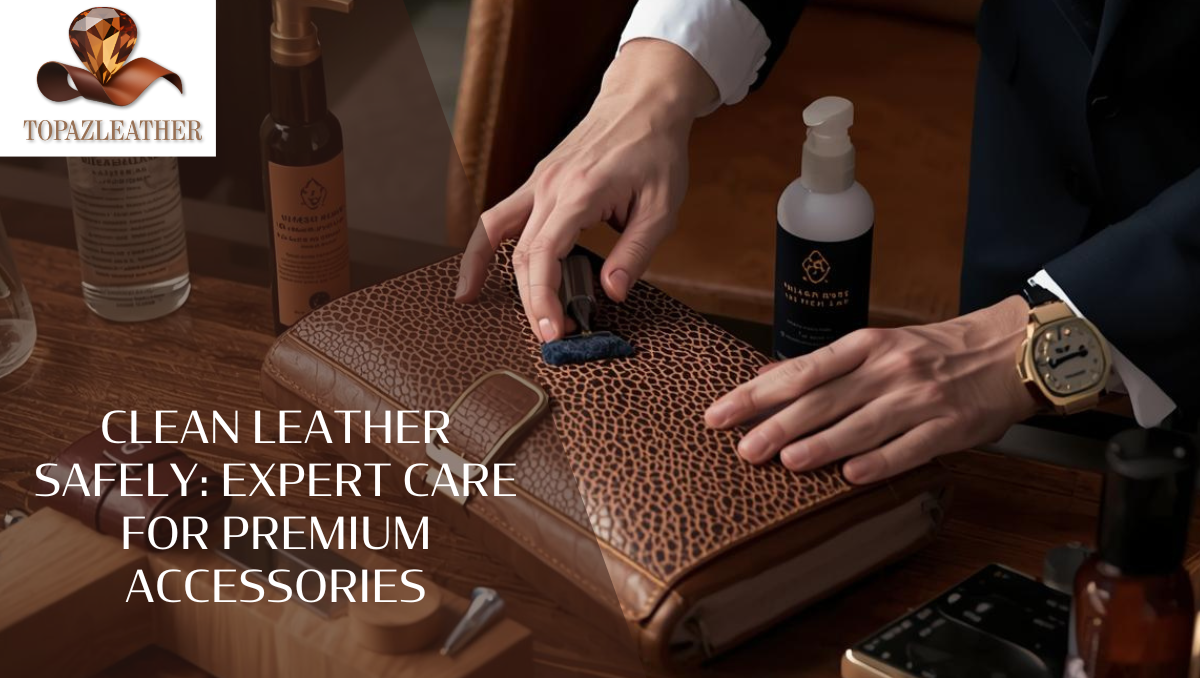
Cleaning Leather safely helps ensure that premium handmade accessories maintain their elegance, durability, and tactile appeal. For discerning buyers in the UK, understanding proper cleaning methods preserves the craftsmanship, heritage, and quality embedded in every Topaz Leather product. Whether you carry wallets, belts, or bags daily, improper cleaning can damage the hide, fade the colour, and compromise structural integrity. By following proven techniques, owners safeguard both the investment and the visual identity of their leather goods, maintaining a luxurious presence in professional and social settings.
The first step in cleaning Leather safely is to recognise the type of Leather. Topaz Leather uses full-grain and top-grain hides, prized for strength, natural texture, and ageing potential. Full-grain Leather resists scratches, develops a distinctive patina, and retains its flexibility, making it ideal for everyday accessories. UK authorities such as the Leather Working Group and the British Standards Institution confirm that understanding hide characteristics informs the safest cleaning practices, ensuring longevity without compromising tactile satisfaction.
Selecting appropriate cleaning products
Luxury leather requires gentle, pH-neutral solutions. Clean Leather safely using products specifically formulated for premium hides, avoiding household detergents or solvents that strip oils and weaken fibres. Topaz Leather recommends conditioners and creams endorsed by Leather Naturally for their balanced formulations that maintain hydration, suppleness, and colour integrity. Improper chemicals risk discolouration, stiffness, and loss of natural grain, diminishing both functionality and aesthetic appeal.
Beyond chemicals, tools matter. Soft cotton cloths, natural-bristle brushes, and microfiber towels prevent abrasion while allowing precise application. UK lifestyle authorities such as GQ UK emphasise that careful handling complements quality materials, ensuring that cleaning preserves the refined characteristics expected from handmade accessories.
Cleaning techniques for different accessories
Wallets, belts, and bags each demand tailored care. Clean leather wallets safely by gently wiping the surfaces, paying close attention to seams and folds where dirt tends to accumulate. Conditioning after cleaning restores natural oils, preventing cracking and maintaining suppleness. For belts, focus on both strap and buckle areas, ensuring that moisture does not infiltrate stitching. Bags require structured cleaning, supporting the shape while wiping interiors and exteriors separately. Authorities like Harrods highlight that meticulous techniques enhance longevity and user satisfaction, reinforcing the value of high-end craftsmanship.
Avoiding common mistakes
Many buyers inadvertently damage Leather through over-wetting, abrasive scrubbing, or excessive conditioning. To clean Leather safely, apply solutions sparingly and allow it to dry naturally, away from direct heat or sunlight. Over-conditioning can leave residues, attract dust, and darken the hide unevenly. Experts such as Which? and British GQ advise patience and moderation, ensuring that maintenance reinforces durability rather than undermines it.
Regular inspection complements cleaning routines. Look for signs of drying, discolouration, or loose stitching, addressing minor issues promptly to prevent long-term damage. UK craftsmanship guides underscore that preventive care sustains both aesthetics and structural integrity, preserving investment value over years of daily use.
Enhancing leather longevity
Cleaning alone cannot guarantee optimal longevity; conditioning and storage play critical roles. Clean Leather safely before applying premium conditioners, such as those recommended by the Leather Working Group, to restore oils and maintain flexibility. Conditioning intervals depend on frequency of use and environmental exposure. Storage should prioritise ventilation, avoid direct sunlight, and protect against humidity to preserve both appearance and texture.
Topaz Leather accessories benefit from regular rotation. Allowing items to rest prevents over-stressing specific areas, while storing them in dust bags or breathable containers helps maintain their shape and shields the hide from pollutants. UK consumer standards and sustainability authorities such as DEFRA highlight that proper care aligns with environmentally responsible practices, reducing the need for replacement and supporting long-term value.
Ethical considerations in leather care
Sustainable practices enhance both material integrity and ethical accountability. Clean Leather safely using products free from harmful chemicals, reinforcing Topaz Leather’s commitment to eco-conscious craftsmanship. Sourced hides from certified tanneries comply with DEFRA environmental regulations, while biodegradable or responsibly produced conditioning agents prevent ecological harm. Institutions like Leather Naturally and the British Fashion Council recognise that responsible care practices sustain both luxury and environmental standards, making conscientious cleaning integral to the premium ownership experience.
Maintaining visual and tactile elegance
Handmade Leather reflects tactile pleasure and visual richness. Proper cleaning techniques ensure the natural grain, colour depth, and patina evolve gracefully. Clean Leather safely to maintain suppleness, allowing accessories to develop character without losing aesthetic integrity. Over time, consistent care enhances prestige, turning everyday use into an experience of understated luxury. Topaz Leather emphasises that this approach not only preserves function but also communicates attention to detail, taste, and cultural literacy.
Integrating routine into lifestyle
For men and women investing in premium accessories, clean leather should integrate seamlessly into their lifestyle habits. Monthly inspections, gentle surface cleaning, and periodic conditioning are part of professional routines and do not cause inconvenience. Authorities such as The Gentleman’s Journal advocate disciplined maintenance, linking conscientious care to perceptions of authority, refinement, and personal-brand consistency.
Incorporating cleaning rituals into wardrobe management helps ensure that Topaz Leather products perform at their best, preserving their shape, functionality, and aesthetic impact. Such practices reinforce the distinction between luxury craftsmanship and mass-produced alternatives, justifying premium investment and enhancing confidence in every use.
Conclusion: Preserving heritage and quality
Clean Leather safely reflects more than maintenance; it demonstrates respect for heritage, craftsmanship, and material excellence. Topaz Leather products embody centuries of artisanal skill, combining full-grain hides, precise stitching, and considered design. By following recommended cleaning, conditioning, and storage practices, buyers protect both the aesthetic and functional value of their accessories, ensuring they remain reliable, visually striking, and a testament to refined taste.
Luxury leather care aligns with ethical sourcing, sustainability, and durability principles. For buyers seeking premium daily accessories, mastering safe cleaning practices enhances both the ownership experience and long-term value, solidifying Topaz Leather’s position as a trusted authority in UK-made handmade leather goods.
Preserve Your Premium Leather
Maintain the beauty and longevity of your accessories by learning to clean Leather safely with Topaz Leather’s guidance. Contact us for expert advice and acquire luxury products that stand the test of time with elegance.
+447477227847
Hello@topazleather.com
www.topazleather.com
FAQs
Use pH-neutral cleaners, soft cloths, and minimal moisture when wiping surfaces gently to avoid damaging the hide.
Condition every three to six months, or more frequently if items are used heavily or exposed to environmental stress.
No, full-grain and top-grain leather require gentle, specific cleaning techniques, while suede or nubuck need specialised care.
Occasionally, professional care helps preserve intricate stitching, patina, and structural integrity, especially for high-use items.
Yes, proper cleaning, conditioning, and storage maintain flexibility, colour, and durability, prolonging both function and aesthetic appeal.