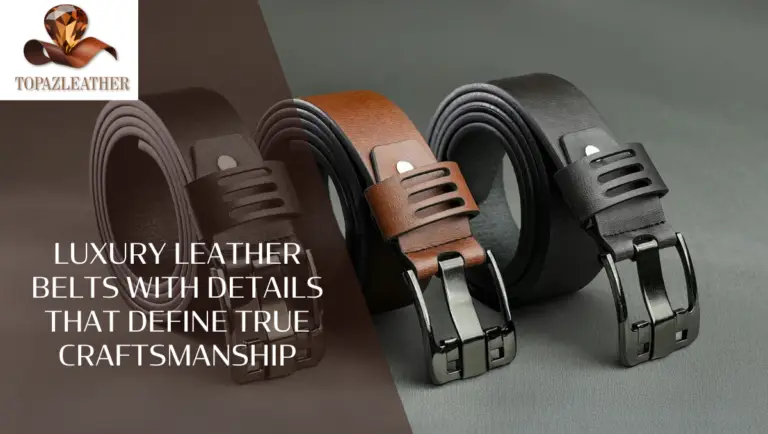
When discerning buyers compare a Genuine leather belt to a PU belt, they seek clarity beyond surface appearance. They want to understand durability, craftsmanship, sustainability, and long-term value. The difference between real leather and polyurethane alternatives shapes not only how a belt looks, but how it performs over years of wear. In the United Kingdom, where heritage craftsmanship still defines luxury, the choice between genuine leather and PU speaks directly to quality standards and personal style.
Understanding the Materials Behind a Genuine Leather Belt vs PU
A proper comparison between a genuine leather belt and a PU belt begins with the materials’ origins. Genuine leather comes from animal hide, most often cowhide, which artisans transform through tanning and finishing. Craftspeople select full-grain or top-grain leather for strength and character. PU leather, by contrast, consists of synthetic polyurethane applied to a fabric base. Manufacturers design it to imitate leather’s surface, yet it lacks the organic fibre structure that gives real leather its resilience.
British consumers increasingly value transparency in sourcing and production. Organisations such as https://www.leatherworkinggroup.com promote responsible tanning standards and environmental accountability within the leather industry. Genuine leather that meets recognised standards supports traceable supply chains and regulated processes. PU production relies heavily on petrochemicals and industrial coatings, which rarely match the environmental longevity of natural hide.
Texture, Appearance, and Natural Character
When customers examine a Genuine leather belt vs. a PU belt, texture immediately reveals the difference. Genuine leather displays natural grain variations, subtle markings, and tonal depth. No two hides look identical. Over time, leather develops a patina that enhances colour and richness. That evolution creates individuality and quiet luxury.
PU leather offers uniformity. Manufacturers emboss synthetic grain patterns to mimic authenticity. The surface often feels smooth and consistent, yet it lacks depth. With wear, PU tends to crack or peel rather than mature. The finish cannot respond organically to movement or conditioning.
British style authorities frequently highlight the importance of material authenticity in wardrobe investment. Publications such as https://www.housebeautiful.com/uk/ and https://www.idealhome.co.uk/ regularly emphasise the use of quality materials that age gracefully. A belt should anchor tailoring, elevate denim, and complete formalwear. Genuine leather accomplishes that task with refinement. PU rarely sustains elegance beyond short-term use.
Durability and Performance in Everyday Wear
Longevity forms the core of the Genuine leather belt vs PU discussion. Real leather fibres interlock naturally, which gives the material tensile strength and flexibility. A well-crafted leather belt withstands daily use without losing shape. It moulds subtly to the wearer’s waist while retaining structural integrity.
PU belts often stretch, crack, or split along stress points. The synthetic coating eventually separates from its fabric base. Many fast-fashion belts last only a season. In contrast, genuine leather belts often serve for years or even decades with correct care.
Consumer watchdog organisations such as https://www.which.co.uk/ encourage buyers to consider product lifespan before purchase. Genuine leather belts represent long-term value. Buyers invest once and benefit repeatedly. PU belts encourage repeated replacement, which increases overall cost and environmental waste.
Craftsmanship and Construction Standards
A refined comparison of a genuine leather belt vs. PU must address craftsmanship. Skilled British artisans cut leather from the strongest sections of hide. They bevel edges, burnish sides, and stitch with precision. Many use traditional saddle stitching techniques that strengthen seams and elevate detail.
PU belts are typically assembled in high-volume production facilities. Manufacturers prioritise speed and cost efficiency. Adhesives often replace stitching. Decorative top layers conceal construction shortcuts.
The Royal Institute of British Architects (https://www.architecture.com) champions integrity in materials and construction within the built environment. The same principle applies to leather goods. Structural honesty defines true luxury. Genuine leather belts embody that philosophy through visible craftsmanship and careful finishing.
Comfort and Wearability
Buyers evaluating a genuine leather belt vs PU often ask which feels better during daily wear. Genuine leather softens gradually while maintaining supportive firmness. It adapts to movement and temperature. Breathability allows air to circulate, reducing discomfort.
PU leather traps heat and moisture. The synthetic surface does not breathe. Prolonged wear can cause stiffness or irritation, especially during warmer months. Genuine leather enhances comfort over time, whereas PU leather often loses flexibility.
Sustainability and Environmental Impact
Environmental awareness influences modern purchasing decisions across the UK. A thoughtful comparison of a genuine leather belt vs. a PU belt must address sustainability. Genuine leather, when sourced responsibly, utilises by-products of the meat industry. Proper tanning methods reduce chemical impact and improve waste management.
The UK government promotes responsible manufacturing and waste reduction through policies accessible at https://www.gov.uk/government/organisations/department-for-environment-food-rural-affairs. Genuine leather belts last longer, reducing landfill contributions. PU belts are frequently sent to waste streams after short use cycles.
Media outlets such as https://www.theguardian.com/uk often discuss fast fashion’s environmental footprint. Synthetic alternatives contribute to microplastic pollution and to reliance on petrochemicals. Investing in durable leather supports a slower, more considered consumption model.
Cost Versus Value in the UK Market
Price often shapes the debate between genuine leather belts and PU belts. PU belts usually cost less initially. Genuine leather belts require a higher upfront investment due to material cost and skilled labour.
However, value extends beyond initial cost. A well-crafted leather belt retains shape, colour, and structure for years. It pairs seamlessly with formal suits, casual trousers, and premium denim. PU belts often need to be replaced after limited wear.
Property experts at https://www.savills.co.uk and market analysts at https://www.rightmove.co.uk frequently emphasise long-term investment thinking in property decisions. The same logic applies to wardrobe investments. Quality leather belts provide enduring value, while synthetic belts deliver temporary savings.
Style Authority and Professional Impression
Professionals across Britain understand that details influence perception. When executives, solicitors, architects, or entrepreneurs compare genuine leather belts vs PU belts, they recognise that accessories complete the silhouette. A belt frames tailoring and signals attention to quality.
A genuine leather belt communicates substance and refinement. Its texture, weight, and finish align with luxury footwear and briefcases. PU belts rarely achieve that coherence. Subtle differences in sheen and stiffness become noticeable under scrutiny.
Leading British news outlets such as https://www.bbc.co.uk frequently explore the psychology of dress and first impressions. Quality materials reinforce credibility and confidence. Genuine leather enhances presence without overt branding.
Maintenance and Care Considerations
A practical review of a genuine leather belt vs. a PU belt includes maintenance—genuine leather benefits from occasional conditioning. Natural balms restore moisture and preserve suppleness. Proper storage maintains shape and prevents creasing.
PU leather requires minimal maintenance but offers limited restoration options. Once cracking begins, repair proves difficult. The synthetic layer cannot absorb conditioning treatments.
Leather care supports longevity and reinforces the premium ownership experience. Owners participate in preserving craftsmanship rather than discarding products prematurely.
The Handmade Advantage
Handmade British belts elevate the Genuine leather belt vs PU conversation. Artisans inspect each hide, cut precise widths, and attach solid brass or stainless steel buckles. They finish edges by hand and polish surfaces carefully.
This process creates individuality and character. Buyers appreciate subtle grain differences and artisanal detail. Machine-made PU belts rarely achieve the same level of authenticity. Craft heritage matters deeply within the UK luxury market, where tradition intersects with modern design.
Emotional Connection and Heritage
A belt might appear simple, yet it holds symbolic value. A meaningful, genuine leather belt vs PU decision reflects respect for heritage and permanence. Leather has shaped British equestrian culture, military uniforms, and tailoring traditions for centuries.
Synthetic substitutes cannot replicate that lineage. Genuine leather connects the wearer to history and craftsmanship. Over time, patina reflects personal journeys and memories. PU cannot record that narrative.
Why Genuine Leather Defines Luxury
Ultimately, the Genuine leather belt vs PU comparison reveals a clear distinction in quality, durability, comfort, and heritage. Genuine leather offers strength, character, sustainability, and refinement. PU delivers imitation aesthetics with a limited lifespan.
Discerning UK buyers prioritise longevity and authenticity. They value ethical sourcing, skilled craftsmanship, and timeless design. Genuine leather belts satisfy informational research while fulfilling commercial expectations for premium investment.
Choosing genuine leather supports artisans, reduces waste, and elevates personal style. It aligns with a mindset that values enduring craftsmanship over disposable trends.
Call to Action
Experience the difference that true craftsmanship makes. Discover our collection of handmade British belts crafted from premium full-grain leather and designed for enduring elegance. When you choose authentic quality over imitation, you invest in heritage, strength, and timeless refinement.
For bespoke orders or expert guidance, contact Topaz Leather today.
+447477227847
Hello@topazleather.com
www.topazleather.com
FAQs
Genuine leather belts last significantly longer because natural fibres provide strength and flexibility. PU belts often crack or peel after short use.
PU leather can resemble real leather at first glance, but it lacks the natural grain depth of real leather and develops cracks rather than patina over time
A genuine leather belt offers long-term value, durability, and a premium appearance, which justifies the higher initial investment.
Real leather shows natural grain variation, subtle imperfections, and a distinctive scent. PU leather feels uniform and synthetic.
Genuine leather belts benefit from occasional conditioning to maintain suppleness and extend their lifespan, enhancing long-term performance.