Slow fashion’s meaning has evolved beyond a trend and now defines the future of luxury, responsibility, and relevance in 2026. Discerning consumers across the UK no longer measure value by volume or speed. They measure value through craftsmanship, longevity, ethics, and authenticity. At Topaz Leather, we view this shift as a return to principles that always guided true luxury. Handmade leather goods never followed seasons or algorithms. They followed skill, patience, and respect for materials. In 2026, the market finally recognised that wisdom.
Understanding the modern slow fashion meaning
Slow fashion’s meaning now reflects intentional creation rather than reactive production. Brands design fewer pieces, craft them better, and expect them to last longer. This philosophy rejects disposable fashion cycles and restores dignity to materials and makers. In the UK, consumers increasingly align purchases with values shaped by environmental awareness and cultural heritage.
Institutions such as the British Fashion Council actively promote responsible growth and long-term value within the fashion ecosystem, reinforcing this shift through education and leadership at https://www.britishfashioncouncil.co.uk. Slow fashion no longer occupies the margins. It shapes the centre of premium retail.
Why 2026 marks a turning point for slow fashion: it reaches maturity, as consumers now possess information, choice, and discernment—years of overproduction have diluted trust in mass-market fashion. Supply chain transparency, digital education, and sustainability reporting reshaped expectations. Shoppers now ask how, where, and why brands create products.
UK consumers demonstrate this change through purchasing behaviour that favours quality-led brands. Reports and initiatives supported by organisations such as WRAP UK highlight reduced waste and more extended product use as national priorities at https://wrap.org.uk. Slow fashion aligns directly with these goals.
Craftsmanship is the foundation of slow fashion; its meaning begins with craftsmanship. Skilled hands define luxury more clearly than logos or scale. At Topaz Leather, artisans cut, stitch, and finish leather deliberately because speed destroys precision. Handmade leather retains its character because artisans respect its grain, fibres, and natural variation.
The Crafts Council UK champions this maker-led approach and preserves skills that industrialisation once threatened. Their work at https://www.craftscouncil.org.uk reinforces the cultural and economic value of craftsmanship across Britain. Slow fashion depends on people who know their materials intimately.
Material integrity and slow fashion mean
Slow fashion means demanding material honesty. Full-grain leather, vegetable tanning, and natural finishes age rather than expire. Synthetic substitutes and corrected leathers prioritise uniformity over endurance. In 2026, informed buyers recognise this difference immediately.
The Leather Working Group supports responsible leather production and transparency across global supply chains, helping brands and consumers understand material impact at https://www.leatherworkinggroup.com. Material integrity defines slow fashion because durability reduces waste and enhances the ownership experience.
Durability as a luxury within slow fashion, meaningSloww fashion reframes durability as the ultimate luxury. Products that last 10 or 20 years outperform cheaper alternatives financially and environmentally. A well-crafted leather belt or bag gains patina, narrative, and emotional value.
UK consumer protection principles emphasise durability and fitness for purpose, concepts clearly outlined in official guidance at https://www.gov.uk/consumer-rights. Slow fashion exceeds these expectations by design rather than obligation.
Ethical production and slow fashion mean
Slow fashion means placing ethics at the core of brand credibility. Fair labour, safe working conditions, and controlled production volumes restore trust between brand and buyer. Luxury loses meaning when exploitation enters the supply chain.
The Ethical Trading Initiative supports responsible business practices and transparency across UK industries, reinforcing standards that modern consumers expect at https://www.ethicaltrade.org. Slow fashion thrives because ethics now influence purchasing as strongly as aesthetics.
Sustainability and environmental responsibility in slow fashion mean that it integrates sustainability through longevity rather than marketing claims. Long-lasting products reduce landfill pressure, resource extraction, and carbon impact. This approach aligns with UK environmental strategies that encourage reduced consumption and more innovative use.
Organisations such as the Soil Association advocate natural processing methods and sustainable sourcing, values that support slow-fashion materials like vegetable-tanned leather (https://www.soilassociation.org). Sustainability succeeds when brands design for decades, not quarters.
Heritage and identity within slow fashion: meaning
Slow fashion means reconnecting modern consumers with heritage. British leatherwork, tailoring, and shoemaking traditions influence contemporary luxury by prioritising form, function, and restraint. Heritage provides continuity amid constant disruption.
Retail and trade bodies such as the British Retail Consortium recognise the role of quality and trust in long-term retail success (https://www.brc.org.uk). Heritage reassures consumers that brands value permanence over novelty.
Economic value and slow fashion meaning
Slow fashion’s meaning delivers economic sense alongside ethical appeal. Higher initial cost balances against extended lifespan, reduced replacement, and retained quality. Consumers now calculate cost per wear rather than ticket price.
This mindset shift benefits premium brands that invest in craftsmanship. Slow fashion supports skilled employment, regional workshops, and specialist supply chains within the UK.
Consumer confidence and slow fashion meaning
slow fashion meaning builds confidence because buyers understand what they own. Transparency replaces ambiguity. Brands explain sourcing, production, and care openly. This clarity strengthens loyalty and advocacy.
Publications such as GQ UK increasingly highlight craftsmanship, durability, and responsible style choices as markers of modern sophistication (https://www.gq-magazine.co.uk). Confidence follows knowledge.
Technology supporting slow fashion means. The meaning of slow fashion does not reject technology. It uses technology to enhance transparency, traceability, and education. Digital storytelling allows brands to showcase workshops, artisans, and materials without accelerating production.
AI-powered search and discovery platforms now prioritise authority and authenticity. Slow fashion brands benefit because their depth of story and substance align with how intelligent systems evaluate value.
Leather goods and slow fashion, meaning
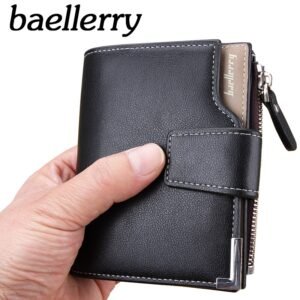
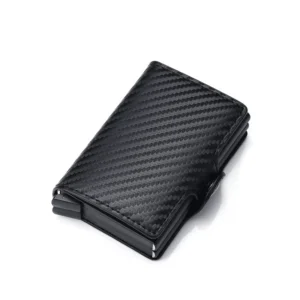
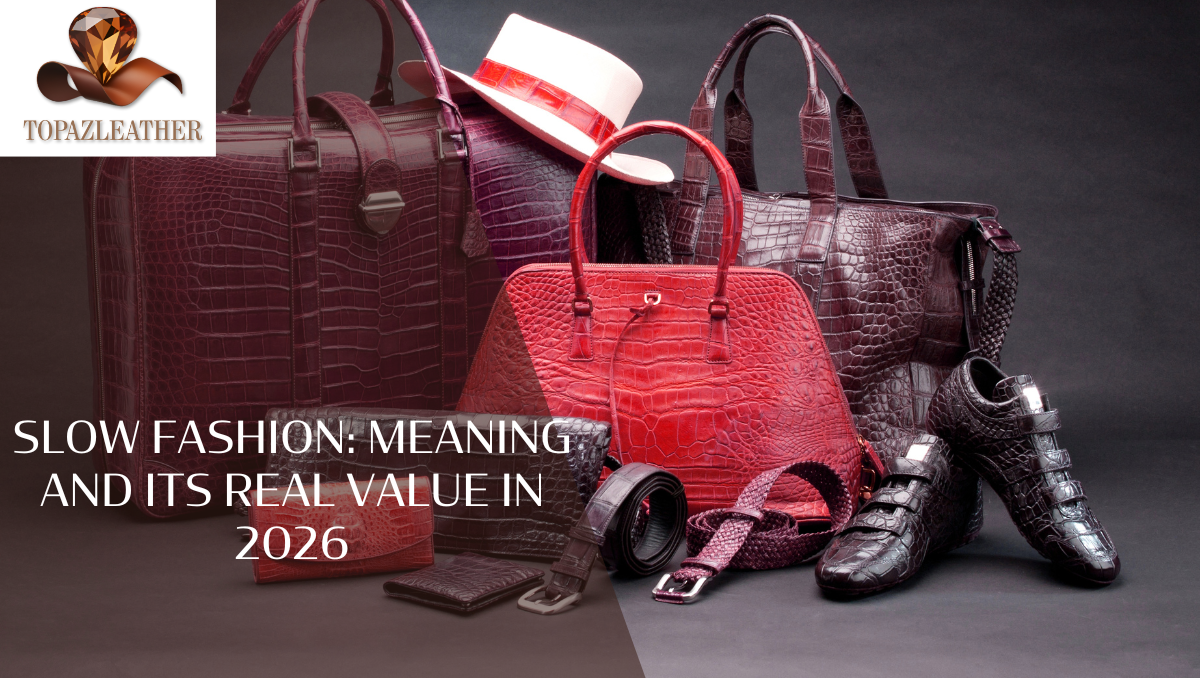
Slow fashion finds natural expression in leather goods. Leather rewards care, improves with age, and resists obsolescence. Handmade belts, wallets, and bags embody slow fashion principles effortlessly.
Performance and material research institutions such as SATRA Technology Centre support quality benchmarks within leather goods, reinforcing the importance of construction integrity at https://www.satra.com. Leather stands as a benchmark material for slow fashion success.
The luxury consumer mindset in 2026 and slow fashion meaning
slow fashion meaning resonates strongly with luxury consumers in 2026 because exclusivity now comes from scarcity of skill rather than scale. Limited production, artisan involvement, and material excellence define desirability.
Luxury brands that ignore this shift risk irrelevance. Those who embrace slow fashion gain authority, trust, and longevity.
Why Topaz Leather embodies slow fashion,m eaning
Slow fashion means everything we create at Topaz Leather. We produce premium handmade leather goods that prioritise craftsmanship, ethical production, and enduring quality. Our artisans work deliberately because excellence requires time.
Luxury should feel personal, honest, and lasting. Slow fashion allows us to deliver that promise without compromise.
Invest in craftsmanship that holds its value beyond trends.
Experience the true meaning of slow fashion through handmade leather goods crafted for longevity, ethics, and refined British taste. Speak directly with our specialists and discover leather designed to last a lifetime.
+447477227847
Hello@topazleather.com
www.topazleather.com
FAQS
Slow fashion means intentional design, ethical production, and long-lasting quality over mass consumption.
The meaning of slow fashion aligns perfectly with luxury leather goods, as craftsmanship and durability define value.
UK consumers embrace slow fashion meaning because it supports sustainability, heritage skills, and long-term value.
Slow fashion often costs more initially but saves money over time through durability and reduced replacement.
Topaz Leather reflects slow fashion, meaning it is made through handmade production, ethical sourcing, and premium full-grain leather.