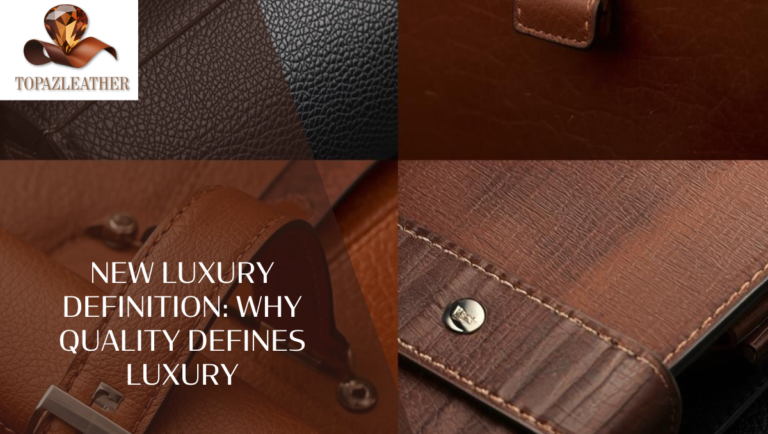
Many discerning buyers ask why leather is expensive, especially when they compare luxury handmade pieces with mass-produced alternatives. The answer lies in material integrity, craftsmanship, heritage, and long-term value. High-quality leather commands a premium because it represents time, skill, ethical sourcing, and durability that outlasts trends. In the United Kingdom, where appreciation for craftsmanship continues to grow, consumers increasingly recognise that genuine leather reflects investment rather than indulgence.
British media outlets such as https://www.bbc.co.uk often explore the revival of traditional craftsmanship across fashion and manufacturing. This renewed respect for artisanal production directly influences how buyers interpret the question, why is leather expensive. People now understand that authentic materials and skilled labour demand fair compensation.
The origin of the hide: where quality begins
To understand why leather is expensive, you must first examine the raw material. High-quality leather begins with carefully selected animal hides sourced from regulated suppliers. Only a small percentage of hides meet full-grain standards. Tanners reject hides with excessive scarring or structural weakness.
Full-grain leather retains the hide’s natural surface, preserving strength and durability. This top layer offers a tight fibre structure, which enhances resistance and longevity. Lower-grade leather often undergoes heavy correction to conceal imperfections, reducing strength and authenticity.
Sustainability and responsible sourcing further influence cost. Government guidance on ethical supply chains, available at https://www.gov.uk, reinforces strict standards across industries. Responsible tanneries comply with environmental regulations and invest in safe processing methods. These commitments increase production costs but protect long-term environmental balance.
When consumers ask why leather is expensive, the answer begins at the source. Quality hides remain limited, and responsible sourcing requires investment.
The tanning process: time and expertise
The tanning process plays a decisive role in answering why leather is expensive. Vegetable tanning can take several weeks. Skilled technicians treat hides with natural tannins derived from bark and plant extracts. This traditional method enhances durability and encourages the development of a rich patina.
Chrome tanning requires advanced facilities and strict chemical management. Reputable tanneries maintain precise control to ensure safe and consistent results. Compliance with environmental standards demands continuous monitoring and investment.
Design authorities such as https://www.riba.org frequently highlight how material processing influences longevity and structural integrity in architecture. Leather follows the same principle. High-quality tanning strengthens fibres and prevents premature deterioration.
Cheap leather shortcuts the tanning process to reduce time and expense. Premium leather embraces patience. That patience answers the question, why is leather expensive, with clarity.
Craftsmanship and skilled labour
Handmade leather goods reflect hours of disciplined labour. When you explore why leather is expensive, you must consider the human expertise behind each piece. Artisans cut panels with precision to ensure optimal grain alignment. They stitch seams carefully, maintaining uniform tension and strength.
Mass production relies on rapid assembly lines. Handmade production relies on attention to detail. Skilled craftspeople inspect edges, reinforce stress points, and meticulously polish finishes. This labour-intensive approach elevates structural integrity and aesthetic refinement.
British publications such as https://www.theguardian.com/uk often discuss the resurgence of skilled trades and artisanal workshops. Consumers increasingly support heritage crafts because they recognise their cultural and economic value.
When you hold a luxury leather bag, you feel this craftsmanship. The structure holds firm. The stitching runs clean. The hardware aligns perfectly. These qualities explain why leather is expensive in a premium market.
Durability and long-term cost efficiency
Many buyers initially focus on price. A wiser perspective examines longevity. One critical reason leather is expensive is its cost-per-use value.
High-quality leather products last for decades when owners maintain them properly. Full-grain leather develops patina rather than cracking. Strong stitching resists strain. Premium hardware avoids corrosion.
Consumer analysis platforms like https://www.which.co.uk regularly encourage buyers to assess durability before purchasing. This principle applies directly to leather goods. A low-cost synthetic bag may require replacement within a year. A premium leather bag can serve for twenty years or more.
Property market insights from https://www.savills.co.uk reveal how British buyers approach investment decisions strategically. They apply similar logic to luxury accessories. When consumers understand why leather is expensive, they recognise durability as a defining advantage.
Design precision and structural engineering
Premium leather goods demand thoughtful design. Structured silhouettes require reinforcement panels and internal organisation. Designers test proportions to ensure balance between aesthetics and function.
Lifestyle publications such as https://www.housebeautiful.com/uk and https://www.idealhome.co.uk consistently demonstrate how considered design enhances daily living. Leather goods follow the same philosophy. Designers carefully evaluate strap placement, compartment layout, and weight distribution.
Precision design increases development costs. However, it guarantees user satisfaction. The seamless integration of beauty and practicality underscores why leather is expensive.
Ethical production and sustainability standards
Ethical production significantly influences price. Modern consumers demand transparency and accountability. Tanneries must manage water usage responsibly and control waste disposal. Workshops must ensure fair wages and safe working environments.
Sustainability discussions in https://www.bbc.co.uk and https://www.theguardian.com/uk highlight growing public awareness around responsible fashion. Premium leather brands invest in ethical compliance to build long-term trust.
Government resources at https://www.gov.uk outline environmental regulations that industries must follow. Compliance increases operational expenses. However, it also strengthens brand integrity and consumer confidence.
When buyers ask why leather is expensive, ethical responsibility forms a central part of the answer.
Limited supply and global demand
Full-grain leather remains finite. Only a small portion of global hide production meets luxury standards. Rising demand for authentic craftsmanship intensifies competition for premium materials.
UK consumers increasingly prefer quality over quantity. Media coverage frequently showcases this shift towards sustainable and durable fashion choices. A limited supply combined with high demand naturally increases the prices.
Unlike synthetic materials, leather depends on agricultural cycles and natural resources. This constraint reinforces exclusivity and explains further why leather is expensive.
The role of brand heritage and reputation
Heritage brands invest years in building trust. They refine techniques, perfect patterns, and establish reliable supplier networks. Reputation carries value because it reflects consistency.
Consumers purchasing luxury leather goods seek assurance. They want confidence in material grade and craftsmanship standards. Established brands command higher prices because they deliver reliability.
Public discourse around British heritage industries often celebrates enduring craftsmanship. When you evaluate why leather is expensive, brand authority contributes meaningfully to perceived and actual value.
Maintenance and lifecycle value
Premium leather rewards proper care. Owners who condition and store their goods correctly preserve strength and appearance. This long lifecycle enhances overall value.
Guidance from https://www.which.co.uk consistently promotes informed ownership across product categories. Leather care aligns with this philosophy. When buyers maintain their items responsibly, they significantly extend their performance.
The combination of durability, repairability, and timeless style ensures that high-quality leather remains relevant for decades. That sustained relevance forms a crucial reason why leather is expensive.
Luxury perception and emotional value
Leather carries emotional significance. It represents tradition, craftsmanship, and status. It connects to equestrian heritage, tailoring culture, and artisanal workshops across Britain.
Cultural narratives frequently explore these associations. The presence of leather in executive offices, heritage estates, and professional environments reinforces its prestige.
When you purchase premium leather, you invest in identity and experience. This emotional dimension complements material quality and craftsmanship, deepening the understanding of why leather is expensive.
Invest in craftsmanship that lasts.
At Topaz Leather, we answer the question of why leather is expensive through uncompromising standards. We select premium full-grain hides, partner with responsible suppliers, and honour traditional craftsmanship. We design products that mature beautifully and serve reliably for decades.
Luxury should deliver substance, not surface appeal. When you invest in high-quality leather, you secure durability, heritage, and authenticity. Choose craftsmanship that reflects your values and professional ambition.
For bespoke guidance or to explore our premium handmade leather collection, contact Topaz Leather today.
+447477227847
Hello@topazleather.com
http://www.topazleather.com
FAQs
High-quality leather requires premium hides, skilled tanning, and handcrafted construction, which increase production costs but deliver superior durability.
Yes. Full-grain leather lasts for decades when properly maintained and develops a rich patina over time.
Vegetable tanning takes longer and requires traditional expertise, which increases cost but enhances character and longevity.
Inspect grain quality, stitching precision, hardware strength, and brand transparency to assess value accurately.
Yes. Compliance with environmental regulations and fair labour standards increases production costs but ensures responsible luxury.