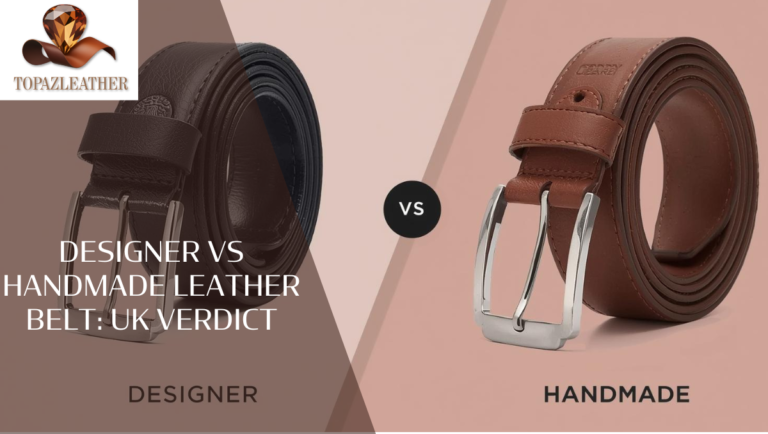
Leather belts are more than functional accessories—they are statements of style, craftsmanship, and personal taste. But when it comes to purchasing a belt, many face the classic dilemma: handmade vs. machine-made leather belt. Understanding the differences is essential for making an informed choice, whether for daily wear, a luxury gift, or a professional wardrobe upgrade. This article dives deep into the world of leather belts, exploring production methods, quality factors, durability, and aesthetic appeal. By the end, you’ll be equipped to select the perfect belt that balances craftsmanship, longevity, and style.
What Defines Handmade Leather Belts
Handmade leather belts are crafted with meticulous attention to detail, relying on skilled artisans rather than fully automated processes.
Key Features:
- Artisan Craftsmanship: Skilled workers cut, stitch, and finish each belt by hand.
- Unique Imperfections: Slight variations in stitching or texture reflect authenticity and individuality.
- Premium Leather: Often full-grain or top-grain leather, chosen for durability and patina development.
- Custom Finishing: Edge painting, burnishing, and personal embossing can be applied manually.
Expert Insight: According to the Leather Manufacturers Association, handmade leather goods often last 2–3 times longer than mass-produced alternatives due to careful material selection and hand-finishing (LMA Leather Craft Insights).
Characteristics of Machine-Made Leather Belts
Machine-made leather belts rely on industrial machinery for cutting, stitching, and assembly, enabling faster, more consistent production.
Key Features:
- Uniformity: Consistent stitching, sizing, and colour across batches.
- Lower Cost: Automated production reduces labour costs, making belts more affordable.
- Mass Production: Ideal for retail markets and standard designs.
- Limited Customisation: Options for personalisation or bespoke finishing are minimal.
While machine-made belts are convenient and budget-friendly, they often lack the nuanced quality and longevity of handmade alternatives.
Comparing Quality: Handmade vs Machine Leather Belt
|
Feature |
Machine-Made Leather Belts |
|
|
Craftsmanship |
High (artisan skill) |
Moderate (automated) |
|
Material Selection |
Premium full-grain/top-grain |
Often corrected or bonded leather |
|
Durability |
Long-lasting (10–20+ years) |
Moderate (5–7 years) |
|
Stitching Quality |
Hand-stitched, strong |
Uniform but sometimes weaker |
|
Personalization |
High (engraving, custom edges) |
Limited |
|
Price |
Higher |
Budget-friendly |
|
Uniqueness |
Unique to artisan |
Standardized |
Authority Note: Forbes highlights that consumers increasingly value handcrafted leather goods for their durability and artisanal appeal (Forbes Leather Crafting Trends).
Advantages of Handmade Leather Belts
- Durability and Longevity: Hand-selected leather and careful stitching result in belts that age gracefully.
- Aesthetic Appeal: Natural texture and hand-finished edges elevate the style quotient.
- Customisation: Engraving initials, logos, or motifs creates personalised, meaningful accessories.
- Sustainability: Often produced in small batches with ethical practices and reduced waste.
Advantages of Machine-Made Leather Belts
- Affordability: Lower production costs make belts accessible to a broader audience.
- Consistency: Uniform measurements and stitching ensure standard quality.
- Availability: Easily found in retail stores and online, with fast production cycles.
- Variety: Wide range of colours, textures, and styles for mainstream consumers.
When to Choose Handmade vs Machine Leather Belt
- Opt for Handmade When:
- You want a long-term investment.
- You prefer unique, artisanal designs.
- The belt is a gift or statement piece.
- Opt for Machine-Made When:
- You need multiple belts for casual or professional wear.
- Budget is a key consideration.
- Youprioritisee uniformity over individuality.
Example: A full-grain handmade belt from a British leather atelier can cost $150–$400 but may last decades, developing a distinctive patina over time. In contrast, a machine-made belt priced at $40–$80 provides utility but lacks long-term character.
How to Identify High-Quality Leather Belts
Regardless of production method, specific indicators help identify premium belts:
- Leather Type: Full-grain leather is top-quality, top-grain is slightly processed, and bonded leather is low quality.
- Stitching: Tight, even stitches without fraying indicate craftsmanship.
- Hardware: Solid, rust-resistant buckles add durability.
- Edges: Burnished, smooth edges reflect attention to detail.
- Flexibility: Soft yet firm leather ensures comfort and longevity.
Internal Link Example: Explore our [handmade leather belts collection] for artisan-crafted options.
Trends in Leather Belt Craftsmanship
- Sustainable Leather Production: Ethical sourcing and vegetable tanning are becoming standard in premium belts.
- Customisation and Personalisation: Consumers increasingly seek bespoke embossing, engraving, and colour options.
- Hybrid Approaches: Some belts combine machine precision with hand-finishing for efficiency and quality.
Stat Insight: According to Statista, the global market for premium leather goods is projected to reach $87 billion by 2027, reflecting the growing demand for artisanal products (Statista Luxury Leather Market).
Conclusion
Choosing between a handmade vs. a machine-made leather belt depends on priorities: durability, uniqueness, and craftsmanship versus affordability, uniformity, and availability. Handmade belts offer superior longevity, customisation, and prestige, while machine-made belts provide cost-effective, consistent quality for everyday wear.
By understanding these differences, you can make informed decisions—whether purchasing a personal accessory, gifting, or investing in a timeless piece.
Call to Action: Elevate your style and invest in quality. Explore our range of handmade and machine-made leather belts to find the perfect balance of craftsmanship and practicality.
FAQs
Handmade belts are crafted by artisans from premium leather, with attention to detail, offering durability and uniqueness. Machine-made belts are mass-produced, uniform, and more affordable.
Yes. Handmade belts are made from high-quality leather and feature precise stitching, often lasting decades, whereas machine-made belts have shorter lifespans.
Customisation is limited. While some manufacturers offer engraving, handmade belts provide far more personalisation options.
Look for full-grain or top-grain leather, even stitching, smooth edges, solid buckles, and firm but flexible leather.
Absolutely. They offer superior longevity, artisanal appeal, and the potential for personalisation that adds value over time.
Full-grain and top-grain leathers are most common, offering durability, natural patina, and premium aesthetics.