Refresh oldleathere, restore Timeless Craftsmanship
When you choose to refresh old leather, you protect more than an accessory. You preserve craftsmanship, heritage, and the integrity of full-grain material shaped by skilled hands. In 2026, British consumers reject disposable fashion and prioritise longevity, sustainability, and refined restoration. A leather belt, wallet, or bag should age with dignity. With expert care, you can restore suppleness, depth of colour, and structural strength.
Media platforms such as https://www.bbc.co.uk and https://www.theguardian.com/uk regularly highlight the rise of conscious consumption in the UK. Buyers now value investment pieces that endure rather than replace. When you refresh old leather, you extendits lifespan, reduce waste, and maintain the premium aesthetic that defines handmade leather goods.
Understanding Why Leather Ages
Leather ages because it interacts with its environment. Natural oils evaporate through daily use. Sunlight alters pigment. Friction softens edges and compresses fibres. When you fail to maintain hydration, leather stiffens and loses elasticity. Cracks then appear along stress points.
Full-grain leather responds differently from synthetic alternatives. It retains the hide’s strongest fibres and natural grain structure. This integrity allows you to successfully refresh old leather. Inferior bonded leather cannot recover once it begins to deteriorate. Quality material invites restoration because it preserves internal resilience.
Consumer guidance from https://www.which.co.uk encourages long-term product care to maximise value. Luxury leather goods deserve similar attention. Restoration protects your financial investment and honours traditional British craftsmanship.
Assess Condition Before You Refresh Old Leather
You must evaluate the condition before refreshing old leather. Inspect surface texture under natural light. Identify dryness, fading, minor scratches, or stiffness. Check stitching integrity and hardware security. Determine whether surface dirt obscures colour.
British lifestyle authorities such as https://www.housebeautiful.com/uk and https://www.idealhome.co.uk frequently emphasise material assessment before restoration in interior design. The same principle applies to leather accessories. Accurate evaluation guides appropriate treatment and prevents over-conditioning or aggressive cleaning.
High-quality handmade leather belts, wallets, and bags respond best to gentle and disciplined care. Patience ensures restoration without damage.
Clean Thoroughly to Refresh Old Leather Properly
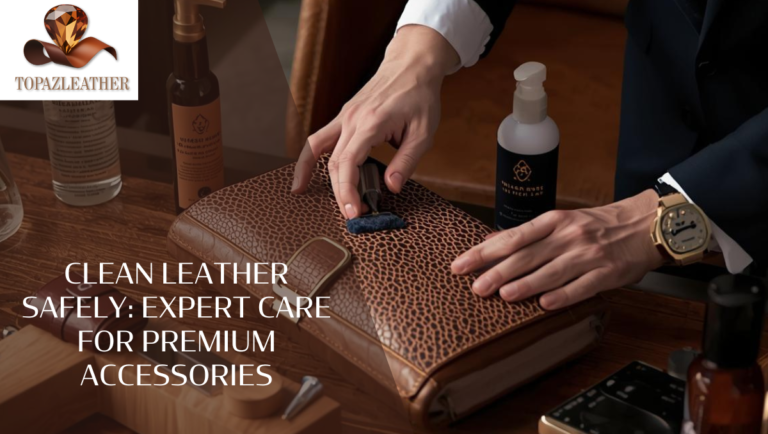
You cannot effectively refresh old leather without proper cleaning: dirt, oils, and environmental residue block conditioner absorption. Begin by wiping the surface with a soft dry cloth. Use a specialist leather cleaner formulated for full-grain hides. Apply small amounts and work in controlled circular motions.
Avoid household detergents. Natural oils are removed by harsh chemicals, which also weaken fibers. Government consumer advice at https://www.gov.uk consistently warns against the inappropriate use of products across materials. Precision protects longevity.
Focus on seams, folds, and edges where residue accumulates. In a well-ventilated room, let the leather air-dry naturally. Avoid radiators and direct sunlight. Controlled drying preserves fibre flexibility.
Rehydrate and Condition to Restore Suppleness
Conditioning forms the heart of any effort to refresh old leather. Premium leather balm replenishes essential oils and restores flexibility. Apply conditioner sparingly with a soft cloth. Massage it into the grain with consistent pressure. Allow gradual absorption rather than surface saturation.
Full-grain leather absorbs nourishment gradually. You should not rush this stage. Controlled hydration prevents oversoftening and maintains structural strength. Over-application can clog pores and attract dust.
Heritage design institutions such as https://www.riba.org champion material respect and longevity in architecture. Leather care reflects the same philosophy. Each application should reinforce durability and preserve integrity.
Restore Colour and Depth with Precision
Fading reduces visual richness. When you refresh old leather, you can revive its colour depth with specialist leather creams that match the original tone. Choose a shade that aligns closely with the existing finish. Apply lightly and build gradually.
Premium British consumers prefer subtle enhancement over artificial shine. Media commentary from https://www.theguardian.com/uk often underscores authenticity in style. Leather should look nourished and refined, not coated or glossy.
After colour restoration, buff the surface gently to achieve a natural sheen. This step enhances texture and reveals grain character without compromising authenticity.
Address Minor Scratches and Surface Marks
Light scratches frequently appear on belts and wallets due to daily friction. When you refresh old leather, you can minimise these marks through controlled conditioning and gentle buffing. The warmth from your hand and cloth helps redistribute natural oils across the surface.
Deeper abrasions may require professional repair. Attempting aggressive sanding weakens the grain. Discerning owners value preservation over concealment. A slight patina reflects authenticity and use.
Consumer authorities such as https://www.which.co.uk emphasise responsible repair over unnecessary replacement. Leather accessories crafted with quality deserve restoration rather than disposal.
Protect Hardware and Stitching
When you refresh old leather, you must consider buckles, zips, and stitching. Polish metal hardware separately with a suitable metal cleaner. Avoid contact between the polish and the leather surface. Protect thread integrity by avoiding excessive moisture around seams.
Handmade British leather goods often feature reinforced saddle stitching. Skilled artisans position each stitch with precision to ensure strength. Careful maintenance preserves this craftsmanship.
Property and heritage commentary on https://www.savills.co.uk often highlights the long-term value of preservation. Leather accessories mirror that principle. Maintenance safeguards structural performance and aesthetic appeal.
Store Correctly After You Refresh Old Leather
Storage influences longevity significantly. After you refresh old leather, store items in breathable cotton dust bags. Avoid plastic coverings that trap moisture. Maintain moderate temperature and humidity levels.
Lifestyle advice from https://www.housebeautiful.com/uk reinforces the importance of ventilation and climate control for natural materials. Leather responds positively to similar conditions. Proper storage prevents mould, cracking, and distortion.
Belts should lie flat or hang vertically without sharp folds. Wallets should be left uncompressed to preserve their shape. Bags should retain stuffing to maintain structure.
Sustainable Luxury and Conscious Restoration
The decision to refresh old leather aligns with broader sustainability goals in the UK. Media coverage on https://www.bbc.co.uk and https://www.theguardian.com/uk consistently highlights environmental responsibility in consumer behaviour. Restoration reduces landfill contribution and promotes mindful ownership.
Luxury no longer equates to excess. It represents refinement, longevity, and ethical responsibility. Handmade leather goods reflect this philosophy. Each restored piece continues its narrative rather than ending prematurely.
Government sustainability initiatives at https://www.gov.uk support responsible consumption across sectors. Leather care embodies that ethos within personal wardrobes.
When Professional Restoration Becomes Essential
Certain conditions require expert intervention: severe cracking, structural tearing, or colour loss beyond surface fading. Skilled leather artisans can re-dye, re-stitch, and structurally reinforce damaged areas.
British craftsmanship thrives through specialist artisans who understand the composition and finishing techniques of hide. Seeking professional support protects your investment and maintains heritage value.
Discerning owners recognise the difference between routine maintenance and structural repair. Intelligent decisions preserve long-term quality.
Refresh Old Leather to Preserve British Craft Heritage
When you refresh old leather, you celebrate British craftsmanship and extend the lifespan of handmade goods. Premium leather belts, wallets, and accessories represent dedication to detail and full-grain excellence. Restoration honours the original maker’s discipline.
Luxury lifestyle platforms such as https://www.idealhome.co.uk frequently highlight the emotional connection between owners and quality possessions. Leather accessories often carry personal significance. Thoughtful care sustains that connection.
British consumers increasingly value authenticity, durability, and material integrity. Restoration reinforces those principles. Every polished edge and conditioned surface reflects respect for heritage and quality.
Invest in Craftsmanship That Lasts
If you value enduring elegance, you should not only learn to refresh old leather but also invest in accessories designed for longevity from the beginning. Topaz Leather crafts premium handmade leather goods in Britain using full-grain hides and disciplined finishing techniques.
Restore your current pieces with care, then elevate your collection with accessories built to age beautifully. Experience British craftsmanship defined by strength, refinement, and integrity.
+447477227847
Hello@topazleather.com
www.topazleather.com
FAQs
You should condition high-use items every three to six months, depending on climate and wear.
No. Household cleaners strip natural oils from fibres and damage them. Use specialist leather care products only.
A quality conditioner may deepen the tone slightly, but it enhances natural richness rather than altering colour drastically.
Light surface cracks improve with conditioning, but deep structural cracks require professional repair.
Yes. High-quality full-grain leather responds well to care and offers better long-term value than frequent replacement.